
A Breton magazine that abandons the kiosk to focus on all-digital changes the relationship with the reader, the editorial rhythm, and the economic model. When a regional publication chooses to go digital, the question is less about the medium and more about what concretely changes in the way local information is produced and consumed.
Brittany regional press: paper, digital, or hybrid magazine
The Breton editorial landscape coexists with several formats. The magazine Bretons publishes 11 issues per year accompanied by 4 special editions, with a subscription providing access to the digital version. Other titles take the opposite approach: an exclusively online distribution, with no printed version.
| Criterion | Hybrid magazine (paper + digital) | 100% digital magazine |
|---|---|---|
| Frequency | Monthly or bimonthly, aligned with printing | Continuous publication, without printing constraints |
| Multi-platform access | Dedicated app + postal delivery | Responsive website, no mandatory app |
| Subscription cost | Higher (printing, distribution, logistics) | Reduced or free depending on the advertising model |
| Editorial responsiveness | Limited by the issue’s closure | Real-time updates possible |
| Geographical coverage | Dependent on points of sale and postal distribution | Accessible everywhere, including from the Breton diaspora |
The gap that emerges from this comparison is structural. A paper title remains subject to printing deadlines that hinder coverage of local news. In contrast, a digital media can publish a report on the same day as a cultural or economic event in Brittany.
The integration of Bretons into Ouest-France’s digital portfolio, alongside Voiles et Voiliers or Bretons en Cuisine, responds to a range logic: the reader accesses multiple titles through a single offer. For an independent digital magazine, it is possible to visit BreizhPower – The 100% Breton magazine! online and see that the positioning is based on an autonomous editorial identity, without being tied to a press group.
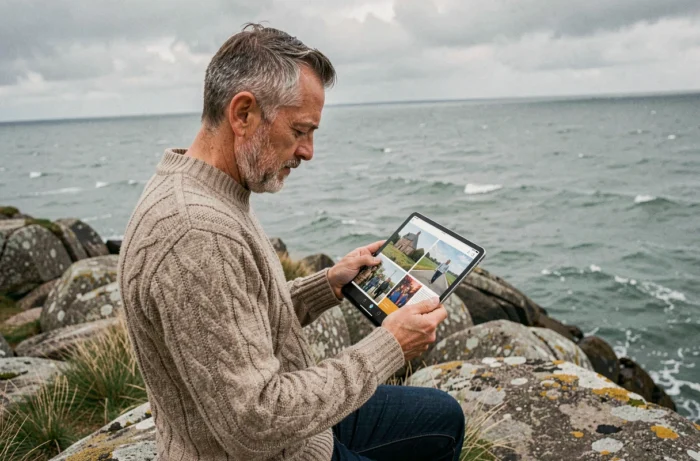
Digital strategy of a Breton media: how the format changes the content
Going digital does not mean just putting a PDF online. The format transforms the very nature of what is produced.
A paper magazine organizes each issue around a central theme, fixed sections, and a set layout. The reader receives a closed object. A Breton digital media operates differently: contents are published continuously, allowing for varied formats (long article, brief, video interview, photo gallery).
In practice, responsiveness changes the game. A canceled festival in Quimper, a Breton company raising funds, a temporary exhibition in Rennes: the digital media addresses these topics within hours. A monthly paper magazine, on the other hand, covers them with several weeks of delay.
- Adjustable editorial depth: an article can be 300 words for a brief news item or 2,000 words for an investigation, without pagination constraints
- Native integration of multimedia content (audio, video, interactive mapping) directly within the article body
- Ability to update an article after publication if new information arises, which does not exist in print
- Direct interaction with readers via comments or social media, creating a feedback loop absent from the printed model
The downside of this agility remains the constant pressure to publish. A completed monthly magazine offers a time for reflection that the digital flow does not encourage.
Breton editorial authenticity and digital independence
The territorial anchoring of the topics covered is a first measurable indicator. A Breton media that does not simply republish national dispatches with a local angle produces its own reports in the five Breton departments. This covers both the economic life of local businesses and cultural initiatives or coastal environmental issues.
Editorial independence represents the second criterion. A title backed by a large press group has resources, but its editorial choices may be influenced by the group’s line. An independent digital magazine chooses its subjects without external arbitration, which can result in sharper angles on sensitive local issues (urban planning, intensive agriculture, mass tourism).

Editorial line and visual identity on the web
The digital realm imposes a redesign of the visual identity. In print, the cover and interior layout define the graphic universe. On the web, it is the ergonomics, typography, and navigation that carry this identity.
A digital Breton magazine must reflect its anchoring even in its graphic choices and the structuring of its sections. The reader can identify within seconds whether the site reflects a genuine editorial approach or if it is a generic content aggregator.
Multi-platform availability and reading habits in Brittany
Mobile access changes the consultation habits of regional press. A Breton digital magazine must offer a reading experience optimized for smartphones and tablets, which requires a responsive design rather than a costly dedicated app to maintain.
The distinction matters. Some publishers, like Ouest-France for its magazines, rely on proprietary apps. This choice guarantees a controlled experience but requires the reader to download an additional tool. A responsive website, accessible directly from the browser, eliminates this friction.
For the Breton diaspora (located in Paris, abroad, or in other French regions), the digital format remains the only realistic way to follow the news from their home territory. Print no longer reaches them, or with a delay that renders it obsolete compared to social media.
Digital Breton press occupies its own niche: neither the raw flow of social media nor the slow pace of paper magazines. A credible digital Breton magazine sits between the two, with well-crafted content published at a sustained pace, accessible everywhere and rooted in the daily reality of the territory.