A poorly prepared soil can ruin all ambitions, even in a generous climate. Species known for their resilience struggle to take root if water stagnates or evaporates too quickly. And if the straight line, often criticized for its lack of creativity, sometimes turns out to be your best ally for simplifying maintenance and slowing the spread of diseases?
We often forget to take technical realities into account from the start: access to water, wind direction, circulation. However, every sustainable project relies on a precise balance between the needs of plants and the desired uses. Missing this initial balance exposes you to many disappointments.
Understanding the fundamentals to envision a harmonious green space
Successfully creating a garden space begins with observation and analysis: the land, exposure, the habits of those who will inhabit it. A garden is primarily a reflection of how you live, never a catalog of plants arranged at random. To achieve a coherent landscaping, every element must be reviewed: the nature of the soil, the diversity of species, accessibility, and landscape integration.
The European Landscape Convention encourages communities to rethink their strategy: caring for green spaces promotes coexistence and the well-being of an entire neighborhood. Recent successes are based on fundamentals: choosing a garden style that aligns with the location, considering the climate, and prioritizing local species.
For those who want to rely on experience, landscaping with Jamet Espaces Verts values listening, knowledge of plants, and technical precision. Whether it’s landscape architects or companies, everyone contributes to building a sustainable garden plan. A well-designed garden quickly becomes a place for exchanges, freshness, and even a discreet barrier against intense urban heat.
Assets like QualiPaysage certification or certain financial aids play a role in the solidity of a large landscaping project. Thinking of a garden as a living space also means accepting that needs will change with the seasons and choosing a vibrant biodiversity, looking towards tomorrow.
What pitfalls should you avoid when planning your garden?
Relying solely on current trends to imagine your garden layout is the best way to be disappointed over time. Recurring mistakes spare no one: ignoring the nature of the soil, forgetting to check the climate, getting excited about unsuitable species. Anyone who plants a hedge that freezes every winter or lets invasive bamboo proliferate knows what this means. The garden sets its own pace: you must learn to listen to it.
The other pitfall is underestimating the extent of the tasks. For a green space to be harmonious and welcoming, it’s not enough to plant here and there: you must consider all uses, plan circulation, and provide visual or acoustic protections without turning the space into a barrier for wildlife. Elements such as a fence, hedge, trellis, screen, wall should structure without enclosing.
The choice of plants often explains the success or failure of a project. Adopting local and suitable plants for the soil and climate, mixing shrubs, perennials, and ground covers: this is what makes the garden strong, attractive, and low-maintenance. Too much exoticism destabilizes the balance, and excessive mineral surfaces weigh down the atmosphere and increase heat. Neglecting accessibility for people with reduced mobility means closing the door to part of the users. A landscaped garden takes shape over time, at the rhythm of the life that develops within it.
To start on solid foundations, focus on the following points:
- Soil analysis should never be overlooked: knowing its texture, pH, and water retention capacity facilitates planting choices and limits unpleasant surprises.
- Plan for maintenance from the design stage: mulching, composting, and thoughtful watering are allies of a sustainable garden.
- Maintain overall coherence: each element, planting, pathway, separation, must logically integrate with the rest of the landscape.
Concrete advice and original ideas to enhance your outdoor spaces
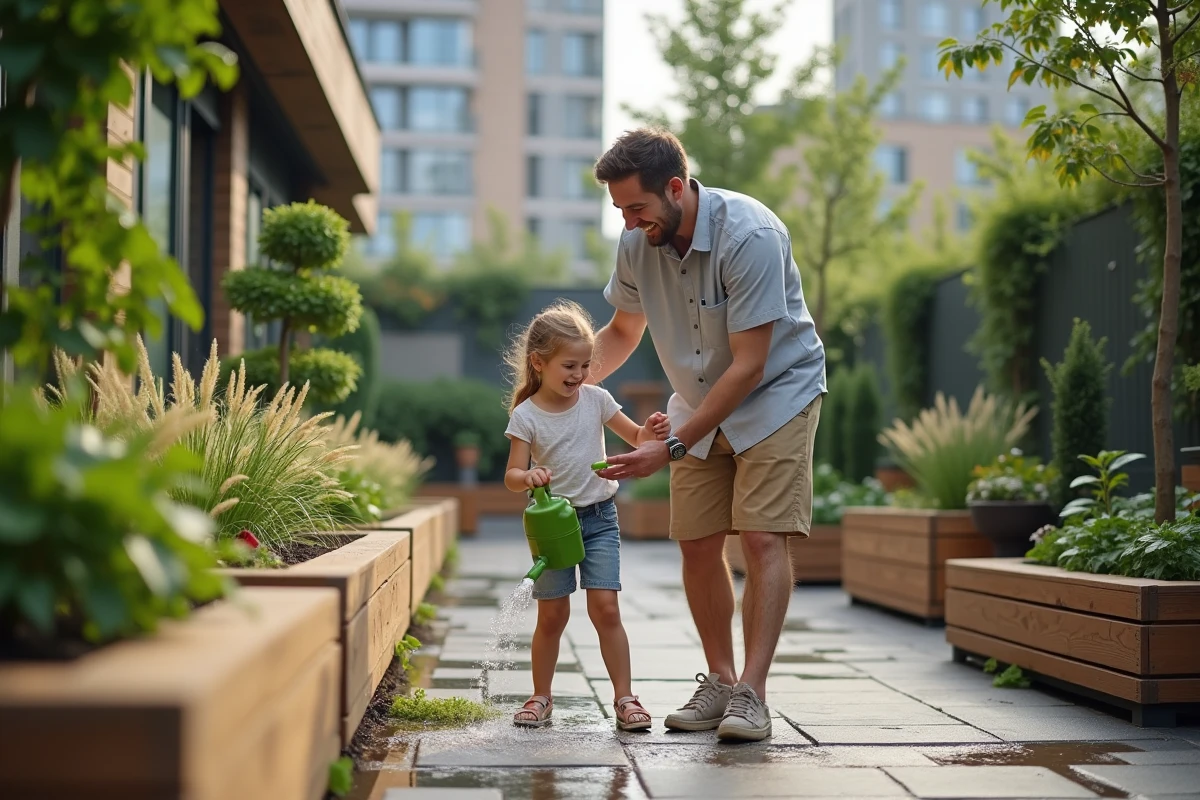
Before you begin, ask yourself a key question: what do you really want to do with your green space? Do you want to create a relaxation area, a play corner, gardens, or all of the above? The ideal is to organize distinct zones: a comfortable terrace for hosting, an accessible vegetable garden, flower beds to stimulate biodiversity. Trees will help create coolness, but their placement must be considered to optimize shade and limit the impact of strong winds.
Don’t overlook garden furniture. Choose benches for reading, loungers for napping, a large table for gathering family and friends. Installing a fountain or a pond attracts life and provides a welcome touch of freshness. For families, a play area or several sports equipment will naturally find their place. Also, prioritize varied hedges with local species, ideal for attracting birds and breaking monotony.
Some easy adjustments can transform your layout:
- Discover how to utilize climbing plants: on a pergola or along a wall, they add relief and enrich perspectives.
- Consider mulching and composting to better retain moisture and naturally enrich the soil.
- Ensure simple access for everyone with well-defined paths, comfortable furniture, and clear signage.
Alternating materials, wood, stone, metal, gives your garden a unique and lively style. Vegetate a wall or create a green roof to counteract summer heat. Integrating a true diversity of plants, using watering judiciously: all these measures open your garden to wildlife, limit water consumption, and sustainably enhance your space.
A garden, if designed to evolve, never ceases to surprise. Each season writes a new page. Stay curious, adapt, and watch how this authentic corner gradually becomes a true link between nature and your daily life.