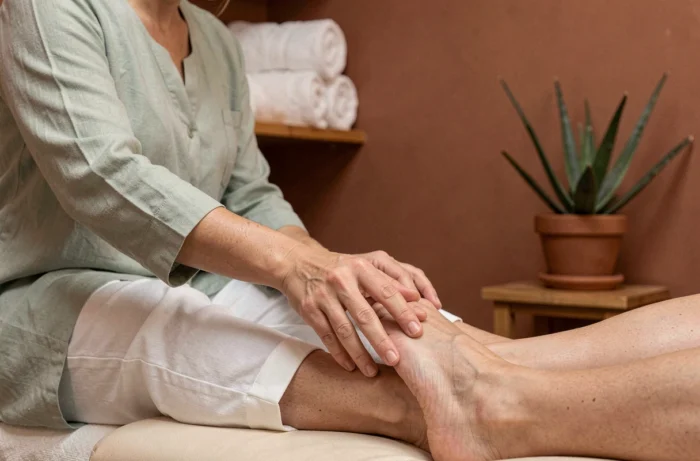
Foot reflexology is based on a simple principle: each area of the foot corresponds to an organ or system of the body. By stimulating these reflex points through targeted pressure, the practitioner aims to promote a return to balance. The practice is gaining popularity in the field of well-being, but its professional framework and level of evidence deserve careful examination.
AFNOR Standard and Council of State: a tense professional framework
The status of foot reflexology in France has undergone a notable legal episode. An AFNOR standard dedicated to the services provided by reflexologists was published on July 2, 2025. This standard aimed to structure professional practice by establishing criteria for competence and quality.
The Council of State has since called this standard into question. This conflict between professional standardization and legal authority illustrates the difficulty in regulating a discipline that does not fall within the realm of regulated medical practice. For practitioners as well as clients, the situation remains unclear: there is no state diploma, and the profession is not regulated in the sense of the Public Health Code.
Individuals seeking a reliable practitioner can turn to specialized directories. Platforms like calcea.fr allow users to find professionals listed in the field of well-being and foot health.
Foot reflexology and stress: what available data shows
Syntheses of studies published in recent years point to favorable signals regarding stress and anxiety reduction. People receiving sessions frequently report a deep sense of relaxation, sometimes as early as the first session. Improvement in sleep is also a recurring theme in feedback.
However, the methodology of these studies raises questions. Samples are often small, protocols are heterogeneous, and comparisons with a simple foot massage (without reflex mapping) are rarely made. The specific effect of reflex zones has not been demonstrated to date.
This does not mean that the practice is without merit. Prolonged physical contact, the practitioner’s attention, and the calm setting of a session: all these elements contribute to a genuine sense of comfort. Field reports vary on the exact nature of the mechanism, but the relaxation achieved is hard to dispute.
A comfort effect, not a medical treatment
Some commercial presentations attribute therapeutic virtues to foot reflexology regarding blood sugar, hormones, or chronic conditions. The available data does not support these claims. Documented benefits are more related to relief from muscle tension, nervous relaxation, and support for overall well-being.
The most honest positioning is to consider reflexology as a complementary practice, useful for managing daily stress, but not a substitute for medical follow-up.
Safety and contraindications: the state of the feet matters
Foot reflexology is generally well tolerated, but the safety of a session directly depends on the health of the feet and blood circulation. Several situations warrant postponing a session or consulting a doctor beforehand:
- Individuals with advanced peripheral neuropathy, particularly related to diabetes, may poorly perceive the pressure applied and risk injury without being aware of it
- Open wounds, skin infections, or fungal infections on the feet make any manipulation contraindicated until healing
- Severe circulatory disorders (recent phlebitis, thrombosis) require medical advice before any stimulation of the feet
A rigorous practitioner begins with a visual examination of the foot and asks questions about medical history. The absence of this initial assessment should alert the client.
What happens during a reflexology session
A session typically lasts between 45 minutes and an hour. The practitioner works on both feet, alternating between firm pressure and lighter movements. Tight or sensitive areas guide the work: pain at a specific point may indicate tension in the associated area of the body, according to the mapping used.
Feelings vary from person to person. Some describe a localized sensation of warmth, while others experience gradual muscle relaxation. Temporary reactions (fatigue, frequent need to urinate, slight emotional sensitivity) are sometimes reported in the hours following.
Frequency and regularity of sessions
Practitioners often recommend a cycle of several closely spaced sessions to observe lasting effects on chronic tension or sleep. Regularity seems more decisive than the intensity of a single session. Gradual spacing is then suggested based on the perceived progress.
The number of sessions needed depends on the reason for consultation and individual receptiveness. The available data do not allow for the definition of a standard protocol applicable to all profiles.
Foot reflexology is part of a well-being approach where foot massage, body listening, and regularity play a central role. Its professional framework is still under construction, and its precise mechanisms require further solid research. Nevertheless, the relaxation it provides and its low risk of adverse effects make it an accessible practice, provided one chooses a trained practitioner and does not attribute to it medical virtues that it does not possess.