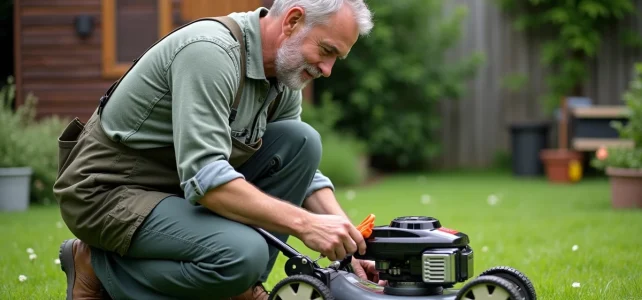
Some lawn mower owners resign themselves to the idea of having to scrape, again and again, the compacted grass mat under the deck. However, others manage to keep their machine clean from one season to the next. The secret does not lie in a miracle product or an expensive machine, but in a handful of precise gestures, sometimes neglected, that make all the difference.
Why does grass always end up sticking under the mower?
Whether your mower is brand new or has several seasons under its belt, the accumulation of grass under the deck invariably enters the equation. Humidity acts as a true catalyst. As soon as dew, a recent shower, or the simple sap of the grass moistens the lawn, the freshly cut blades turn into a kind of plant paste that aggregates, infiltrates everywhere, coats the deck, and ultimately forms lumps around the blades. The denser the lawn, the thicker this grass mat becomes. Manufacturers of gardening equipment are constantly innovating with each new generation of machines, but no one has yet found the absolute solution.
The deck, whether plastic or metal, always ends up being trapped. On metal models, even the slightest trace of moisture prolongs contact, rust sets in, creating micro-roughness that retains even more residues. Plastic decks do not rust, but the sap plays its role as a natural glue perfectly.
The sharpness of the blades also comes into play. A dull blade tears more than it cuts, which releases more sap, and the vicious cycle begins again. No matter the type of machine: gas, electric, robotic, or tractor, all eventually suffer the same fate. With each pass, the cut generates new plant deposits.
To limit these inconveniences, there are tips to prevent grass from sticking under the mower that have been tested in the field. Understanding what promotes accumulation allows you to act accordingly and avoid residues that prematurely damage your equipment.
Concrete tips to limit accumulation and keep a clean deck
To counter the wet grass that embeds under the deck and wraps around the blades, there are accessible solutions for everyone. Here are some effective practices to adopt:
- Apply a thin layer of vegetable or cooking oil (even recycled and filtered) under the deck and on the blades: this protective film reduces grass adherence and facilitates cleaning.
- Use an anti-stick spray designed for gardening, based on silicone or Teflon, especially on metal decks sensitive to corrosion.
- Regularly sharpen the blades: a clean cut limits sap release and minimizes the formation of sticky deposits.
- Mow only when the lawn is dry: this prevents the formation of thick clumps and facilitates maintenance.
- Adjust the cutting height by leaving the grass a bit taller to limit the production of plant juice while preserving the vigor of your lawn.
- Change the mowing direction from one time to the next: this prevents soil compaction and encourages root development.
The choice of mowing mode also influences maintenance. Mulching, which finely chops the grass and redeposits it on the ground, limits the formation of clumps under the machine while nourishing your lawn. Remember to empty the collection bag regularly, especially if your grass is dense or slightly damp. Finally, reducing the area to be mowed by introducing ground covers or practicing differentiated mowing promotes biodiversity and lightens the maintenance task.

Clever cleaning: products, simple gestures, and mistakes to avoid after mowing
Clear the deck and blades of mowing residues
A systematic maintenance of the deck and blades, right after each mowing, makes all the difference. The longer you wait, the more the grass dries and clings firmly, making cleaning tedious. Protect your hands with suitable gloves, equip yourself with a stiff brush or a plastic scraper to avoid scratching the surface, and remove the persistent residues. Then use a soft cloth to remove moisture, which slows down the appearance of rust on metal parts.
Also consider these points during cleaning:
- Focus on hard-to-reach areas with the brush.
- Finish with a lightly oiled cloth to enhance protection.
- Check that the collection bag’s drainage openings are clear.
Recommended products and precautions
It’s best to avoid powerful water jets, especially around the motor and bearings: persistent moisture invites corrosion and the proliferation of fungi. Prefer applying a protective film of silicone or dry graphite to preserve metal surfaces. And for used oils, follow the recommendations of ADEME to ensure their responsible disposal.
Common mistakes to avoid
Accumulating residues under the deck, even through negligence, accelerates wear, spreads diseases and fungi, and ultimately harms the operation of your mower. Taking the time to clean each exposed area after each mowing prolongs the tool’s effectiveness and the vigor of your lawn.
By adopting these regular gestures, you maintain control over your machine and provide your lawn with a playing field free of sticky traps. The difference, over the weeks, is striking: a clean deck, a smoothly running mower, and a lawn that breathes. Who would have thought that a simple wipe could change the game so much?