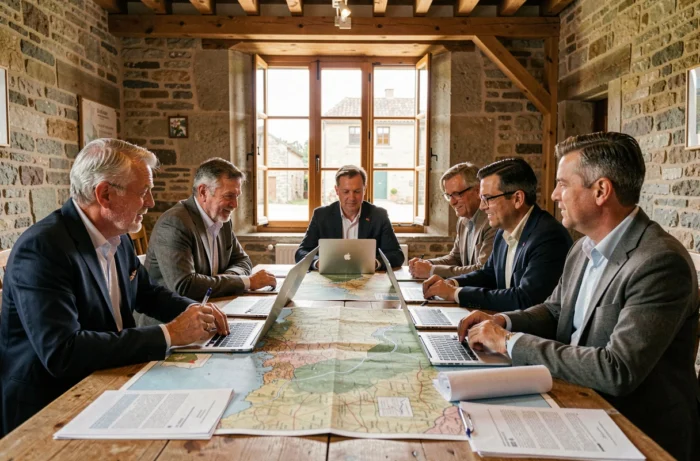
In France, the vast majority of intermunicipal authorities are rural. They bring together low-density municipalities, often far from urban centers, that share responsibilities to organize services none of them could afford to provide alone. Since January 1, 2025, a new responsibility has been added: municipalities or their intermunicipal groupings have become the organizing authorities for early childhood services, prompting rural communities of municipalities to rethink their local service provision.
Local mobility and intermunicipal cooperation: the weak link
Sharing services only makes sense if residents can access them. A 2025 study by Familles Rurales and IFOP highlights persistent dissatisfaction with local transport in rural areas, alongside difficulties related to the cost of getting around.
This raises a direct question for rural public intermunicipal cooperation bodies (EPCIs): what is the point of an intermunicipal daycare center or shared health center if some residents have no reliable way to get there? Mobility determines whether residents can actually access shared services.
Familles Rurales recommends solutions that can be organized at the intermunicipal level: car sharing, rental bikes, and community transport services. These initiatives extend beyond the boundaries of a single municipality and make sense as part of a coordinated local development plan. Some communities of municipalities have begun to structure this type of service, as shown by https://www.cc-charny.fr/ in its overview of the responsibilities it carries out.
Project development expertise in small rural municipalities
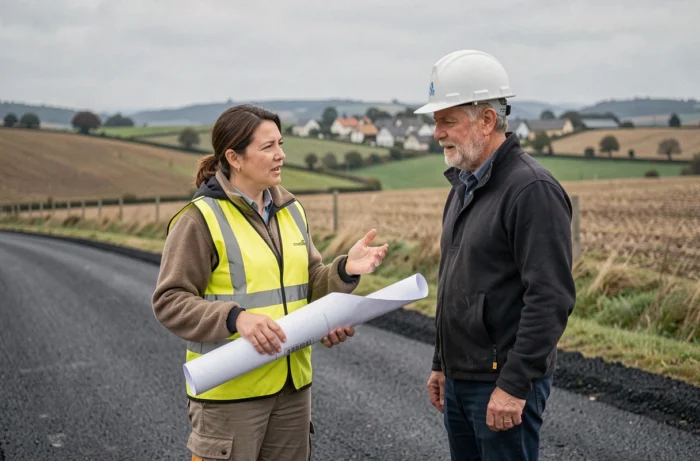
Municipalities with just a few hundred residents rarely have a technical services director or project officer capable of putting together a grant application. Project development expertise is the bottleneck for rural development. A mayor may identify a need—renovating the school, creating a community space, or opening a multi-service shop—without having the staff to turn the idea into a funded project.
The Villages d’avenir program was designed to address this shortfall. It aims to help rural municipalities find funding, engage partners, and overcome administrative obstacles. Intermunicipal cooperation plays a supporting role here: communities of municipalities can share a project development position, so each village does not have to recruit someone individually.
What intermunicipal cooperation brings to a project in practical terms
Pooling resources is not limited to mandatory responsibilities such as waste collection, water, and sanitation. It can also provide day-to-day technical support:
- A project officer shared by several municipalities, able to prepare funding applications and oversee construction through to completion
- Centralized monitoring of regional and national calls for projects, with information shared with the mayors of member municipalities
- Support with project ownership for renovations to municipal buildings or the creation of business premises
Without this support, projects remain mere intentions in the most isolated municipalities. Intermunicipal cooperation does not replace municipal decision-making; it provides the means to put those decisions into action.
Early childhood services and local provision: a real-world test
The transfer of responsibility for early childhood services to municipalities or their groupings, effective since January 2025, illustrates the tension between pooling resources and maintaining local access. For a rural community of municipalities, organizing these services means mapping needs, identifying existing childcare options (childminders, micro-crèches), and addressing gaps.
Rural municipalities often have dispersed needs across a wide area. An intermunicipal daycare center located in the main town may be a 20- or 30-minute drive from the most remote hamlets. The answer then lies in decentralized solutions: mobile early childhood centers, support for childminders across the area, and coordination of schedules at the intermunicipal level.
Rural contracts identified in Île-de-France offer a glimpse of this approach applied to other areas. They fund health centers, shops, schools, and municipal premises—projects located in villages but part of a broader local development strategy.
Community life and the ecological transition: less visible intermunicipal responsibilities
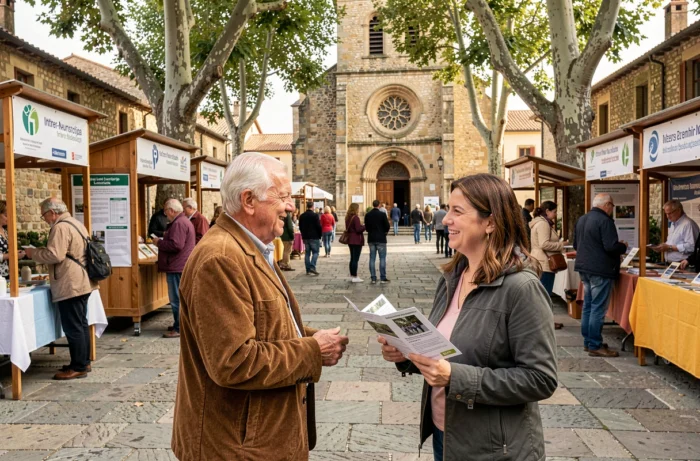
Debate about rural intermunicipal cooperation often focuses on facilities and traditional public services. Residents also express expectations around community life and the ecological transition—two areas where cooperation between municipalities can deliver tangible results without major investment.
A community of municipalities can coordinate a network of sports or cultural associations to avoid duplication and share facilities and equipment. It can also develop a local climate, air, and energy plan that sets shared targets for energy-efficient renovations or the development of local supply chains.
The limits of pooling resources for community and environmental initiatives
For most communities of municipalities, these responsibilities remain optional. Whether they are taken on depends on the political will of elected officials and the financial capacity of the EPCI. An intermunicipal project only moves forward if the mayors of member municipalities see a benefit for their residents.
Intermunicipal tax revenues (the business property contribution and the residual housing tax on second homes) are not as high in rural areas as they are in urban areas. Budgetary flexibility is more limited, forcing local authorities to make choices between priorities. An EPCI that devotes most of its resources to roads and sanitation has little left to support an association network or fund electric vehicle charging stations.
Intermunicipal cooperation remains the main tool available to rural municipalities for developing their area. Its effectiveness depends less on the legal framework, which is already well established, than on two practical factors: the project development expertise available and whether residents can actually access services from every village. A shared service that people cannot access does nothing to revitalize an area.