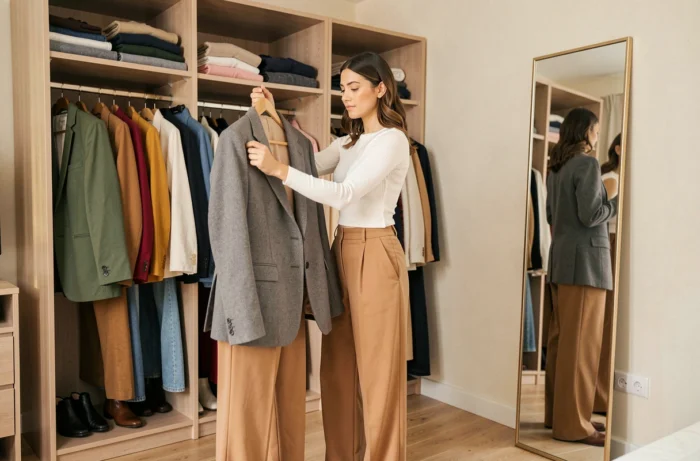
Choosing on-trend clothes to express your everyday style is about more than following seasonal collections. Shopping habits are changing: second-hand fashion is gaining ground in France, with 18- to 34-year-olds spending a larger share of their clothing budget on it than previous generations.
At the same time, an analysis published by The Conversation in November 2026 shows that buying second-hand can itself fuel impulse purchases, as money from reselling clothes is often reinvested in new ones. So the question is not just what to buy, but how to measure how much each item is actually worn.
Wardrobe inventory: the first filter before any purchase
Competitors talk about body shape, colors and mood boards. None starts with the step that comes before any clothing choice: knowing what you already own. A European review reports that a significant share of clothes in people’s wardrobes goes unworn for a year, even though most of these items are still in wearable condition or could be reused.
Before adding a trendy item, a methodical clear-out can help you identify three categories: clothes you wear regularly, pieces you’ve forgotten about but can still use, and items to repair or resell. This process often reveals unexpected outfit combinations. A pair of trousers bought two seasons ago could be paired with a recent accessory to create a current look, without buying anything else.
To explore pieces that complement the items you’ve already identified in your inventory, here’s a useful resource: https://leroyaumedelamode.fr.
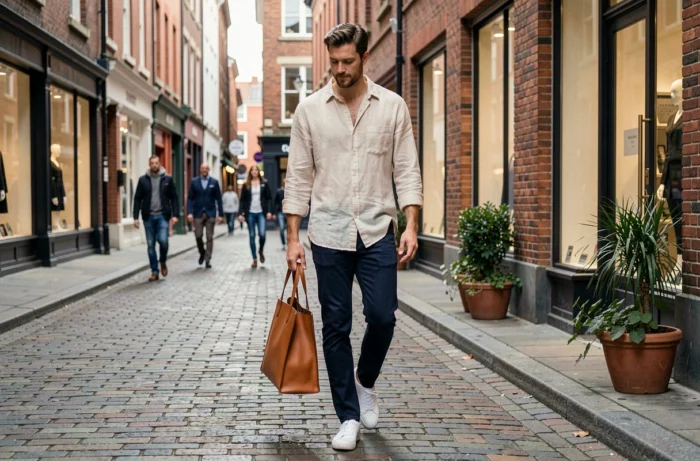
Second-hand and new clothes: a comparison of shopping options
The choice between new and second-hand goes beyond price. The factors that really affect the longevity of a wardrobe deserve a closer comparison.
| Criterion | Buying new (traditional retailer) | Second-hand (thrift store, platform) |
|---|---|---|
| Size availability | Wide selection, standardized sizes | Variable stock, unpredictable finds |
| Condition of the garment | New, with no signs of wear | Variable; inspection needed (seams, fabric, fastenings) |
| Composition traceability | Label required | Label sometimes missing or faded |
| Impact on wardrobe turnover | Seasonal cycle encourages purchases | Risk of impulse buying in bundles or during promotions |
| Repairability | Depends on the original quality | Items have often already stood the test of time |
The key takeaway: an item’s value is measured by how much it is actually worn, not where it was bought. A second-hand garment bought in a bundle during a promotion can end up just as unworn as a new item bought on impulse in a sale.
Textile repair and separate collection: what EU regulations are changing
Since January 2025, European Union countries have been required to organize separate textile collection. In September 2025, the European Parliament approved new rules requiring producers to contribute to the costs of collection, sorting and recycling. These obligations are already changing the landscape for consumers.
The European Commission has identified textiles as a priority sector in its 2025–2030 ecodesign work plan. A digital product passport for textiles is in the works, although the detailed requirements still need to be set out in subsequent acts. In time, this passport could provide information on a garment’s exact composition, traceability and repair options.
Until then, choosing trendy clothes means considering practical durability criteria:
- Check the composition on the label and favor materials that are easy to care for (low-temperature washing, air-drying)
- Inspect the quality of the seams, buttons and fastenings, which determines how easy the garment will be to repair later
- Make sure the cut allows for alterations (hems, waist adjustments) without changing the garment’s silhouette

Everyday style: putting together outfits with fewer pieces
You don’t need a large wardrobe to express your personal style. Three to four well-chosen pieces can cover most everyday situations when they work well together. Straight-leg trousers, a dress that can go from day to evening, a structured bag and a versatile pair of shoes make a solid foundation.
The most effective approach is to try combinations before you buy. Lay your existing clothes out on a bed, photograph the combinations, then identify what’s genuinely missing. If a blazer works with three different bottoms, it earns its place. If a trendy piece only works with one outfit, its usefulness is limited.
Colors play a key role in making a wardrobe versatile. A foundation of neutral shades (navy, beige, black, off-white) paired with one or two accent colors lets you vary your looks without buying more. Accessories (a scarf, jewelry, a belt) are often all it takes to bring an existing outfit up to date with current trends.
Buy less to define your style more clearly
The temptation to refresh your wardrobe every season runs up against a simple truth: personal style is built by editing, not accumulating. The pieces you wear regularly define your style far more clearly than the ones you buy and forget about.
Taking inventory of your wardrobe, repairing damaged items and turning to second-hand shopping selectively all form part of a coherent cycle. Buying a trendy item then becomes a deliberate choice, prompted by a specific gap—not a reaction to a promotion or a fashion show.
EU regulations on textile collection and ecodesign will gradually make this information more accessible. Until then, the most reliable test is how much you wear an item: a garment worn at least once a week for a season has earned its place in your wardrobe.