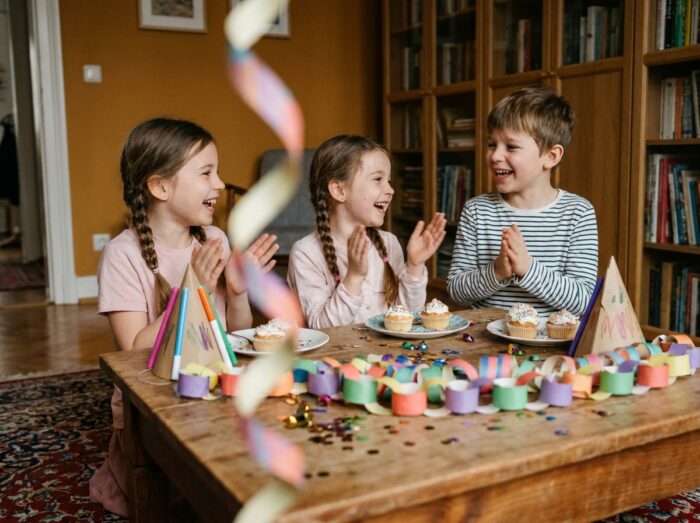
In France, birthday parties and end-of-school-year celebrations are part of family and school life. Organizing a festive occasion for children means navigating constraints that adults sometimes underestimate: food allergies, differing family budgets, and cultural or religious preferences.
The individualized support plan (PAI) already sets out accommodations for classroom snacks, showing that schools anticipate these situations. The question then shifts to the home: how can every child take part fully in the celebration without leaving parents to shoulder all the organizing?
Food allergies and children’s parties: what the PAI changes in practice
The PAI is not just for school lunches. This document, signed by the family, doctor, and school, can specify accommodations for birthday snacks and festive activities held in class. A child with a peanut or gluten allergy should not be left out when their classmates blow out the candles.
Applying the same principle at home takes some advance planning. Asking the guests’ parents about dietary restrictions is the simplest step, but it is still far from standard practice. Offering a cake that accommodates the most common allergies (free from tree nuts and cow’s milk) avoids having to prepare a separate menu that singles out the child concerned.
A magician in Paris or elsewhere can also shift the focus to the show rather than the food, easing the pressure around the buffet and bringing all the children together in the same experience.
Unequal family budgets: birthday parties as a reflection of social differences
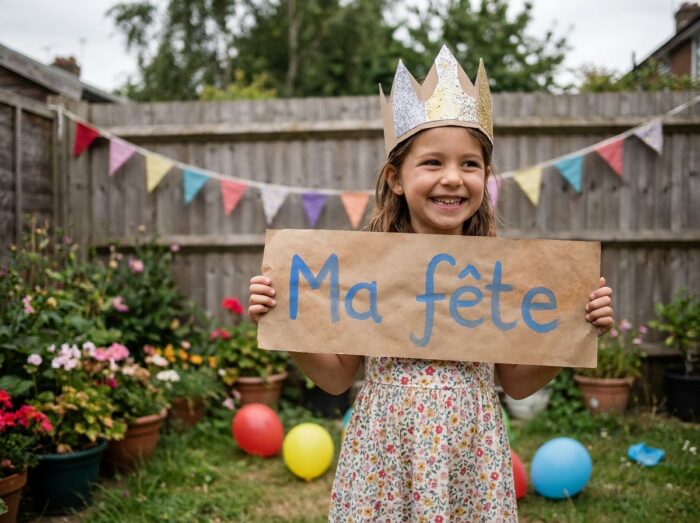
Differences in family finances can sometimes show up in the way birthdays are organized. Venue hire, professional entertainment, party bags filled with treats: the cost of a party can quickly add up. A child invited to an elaborate party may feel awkward when it is their turn to invite friends if their family does not have the same budget.
Second-hand toys and community collections
Reusing toys is becoming a lasting part of party traditions. Reuse centers offer a practical solution: donated toys are checked, cleaned, and put back into circulation when they are in good condition. Giving a second-hand board game in perfect condition is nothing to be ashamed of. It is even a way to separate the value of a gift from its price.
Some toy drives involve children directly. They bring in games they no longer use. Preparing for the party then becomes a moment of sharing and passing things on, rather than just consuming. Toy donation drives are organized in several cities across western France in the run-up to Christmas, bringing families together in a collective effort.
Practical alternatives to expensive parties
- Host a themed party in a public park or community garden, with no venue hire, and ask each family to bring a dish or drink
- Replace party bags with a group activity (a craft workshop, treasure hunt, or cooperative game) so every child goes home with something they made
- Suggest a modest group collection instead of asking each guest to bring an individual gift, reducing the financial pressure on each family
These formats do not require less preparation, but they spread the workload among several adults instead of placing it all on one household.
School celebrations and private parties: two different approaches, one child
At school, celebrations are organized and supervised. Carnival, the end-of-year fair, and Epiphany celebrations follow a predictable calendar. The teacher manages the setting, while parents’ associations often help with the logistics. Children can take part without their families having to organize everything on their own.
Private parties work very differently. One parent (often the mother) takes on all the planning, preparation, and cleanup. The gap between these two models creates a kind of exhaustion that articles about birthdays rarely mention.
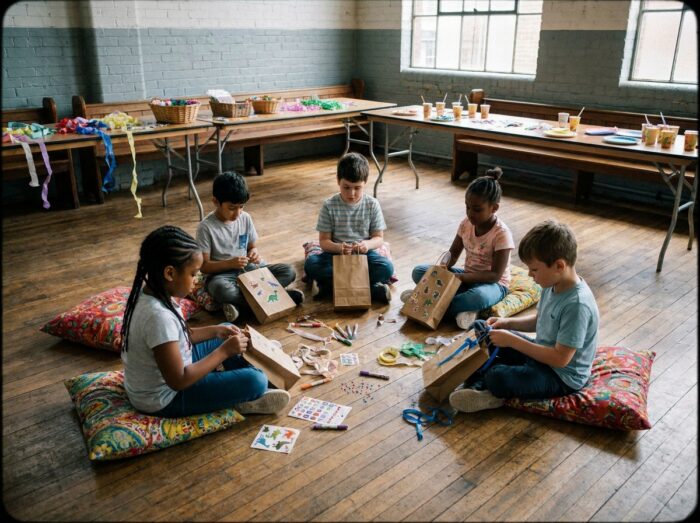
Some schools and parents’ associations are trying out formats in between: monthly group birthday celebrations for children born in the same month. This format shares the logistical workload and ensures every child gets their moment, including those whose families cannot host a party at home.
Family preferences and inclusion: adapting the party without taking away its meaning
Not all families celebrate the same occasions, or in the same way. Christmas, birthdays, and religious or secular celebrations have different significance in different households. When a class organizes a festive event, the question of inclusion arises: should all cultural references be removed to avoid offending anyone?
Adapting does not mean making everything neutral. An end-of-year celebration can mark the passage of time or the end of a school year without being tied to a specific tradition. The point is not to ban any particular symbol, but to make sure every child feels they belong in the shared celebration.
- Offer several types of activities (creative, sports, and music) so every child can take part in a way that suits them
- Let families know the program in advance, without requiring them to take part in every activity
- Set aside a quiet space for children who need a break, since not everyone responds to the excitement of a party in the same way
What we still don’t know
There is little data on how children themselves perceive these adjustments. Feedback from the field comes mostly from teachers and parents, and rarely directly from children. It remains difficult to document outside a clinical setting whether a child with allergies truly feels included when eating a different cake, or whether a child from a low-income household notices the difference in budget between their party and a classmate’s.
Children’s parties are not just a logistical detail. They reveal inequalities, social norms, and a community’s educational choices. Sharing the organizing, planning for allergies, and reusing toys: these practical steps do not turn a celebration into an administrative chore. They simply help make the occasion belong to all the children there, not just those whose parents have the means or energy to do it all themselves.