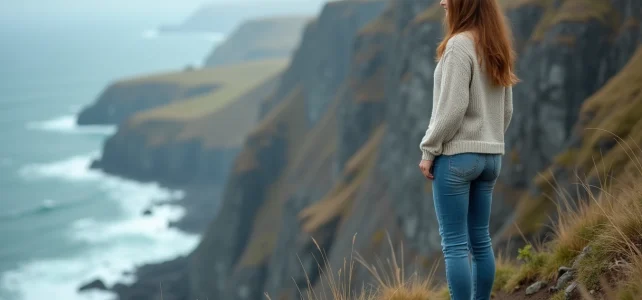
In 2015, the journal ‘Personality and Individual Differences’ reported that one third of European adults feel a recurring need to leave their daily environment, without any apparent reason related to their professional or family situation. This phenomenon seems to withstand economic fluctuations and restrictive migration policies.
Neurologists observe that certain regions of the brain react differently to novelty, while geneticists identify a variation of the DRD4 gene associated with increased mobility. This finding intrigues as much as it divides psychologists, anthropologists, and sociologists, who are unable to agree on its deep origins.
When the desire for elsewhere becomes irresistible: understanding the wanderlust syndrome
The wanderlust syndrome goes far beyond a simple attraction to vacations or a fleeting desire for exoticism. It manifests as an inner drive, as powerful as it is insistent, that pushes some to organize their lives around travel. Here, movement is not a distraction, but a deep necessity. Among those who experience it, a true strategy is observed: each return is accompanied by a projection towards the next adventure, each routine provokes a persistent discomfort. The novel becomes almost vital, cultural diversity acts as a driving force, and the unknown transforms into a horizon to conquer.
The origin of the word sheds light on this phenomenon. “Wanderlust” combines the German verb “Wandern” (to wander, to roam) and “Lust” (desire, longing). It is indeed an impulse, a consuming passion for elsewhere. Observing those driven by this need, several traits recur:
- visceral need to travel
- dissatisfaction with routine
- continuous planning of new trips
- financial and emotional investment in each project
Film and literature are full of references to this incessant quest, from the stories of Julien Blanc-Gras to the highly publicized wanderings of Brangelina. This is not trivial: this form of obsessive travel fascinates, questions, and sometimes worries. Some researchers even go so far as to mention a true syndrome of withdrawal upon return, equating post-travel nostalgia with addiction.
To understand the wanderlust syndrome, one must closely examine its multiple facets: its concrete manifestations, its psychological springs, and its repercussions on social and personal life. This passion for travel, as enriching as it may be, sometimes leaves the individual in tension between exhilaration and difficulty in settling down somewhere permanently.
What are the origins of this thirst for travel: between genes, psychology, and cultural influences
The wanderlust syndrome is not limited to a trendy tendency or a simple desire for elsewhere. For some scientists, the root of the phenomenon may well be anchored in our DNA. The famous traveler gene, DRD4-7R, draws attention: it modulates dopamine, the neurotransmitter linked to the search for novelty, risk-taking, and curiosity. David Dobbs, a contributor to National Geographic, has highlighted this genetic variant as a catalyst for a quest for new experiences, an attraction to adventure.
But biology does not tell the whole story. The environment in which one grows up also plays a key role. A childhood marked by discovery, parents open to exploration, an education that values diversity: all these factors feed the taste for departure. Literature also shapes this imagination, from Nicolas Bouvier to Sylvain Tesson, showing that travel can become an identity pillar.
The social context further amplifies this phenomenon. Traveling is no longer just an individual experience: it has become a marker of success, even of self-construction. Adventure stories, from Tolkien to Blanc-Gras, contribute to this valorization of departure. At the intersection of genetics, psychology, and collective pressure, the wanderlust syndrome asserts itself as a contemporary expression of a deep desire for escape, a tension between heritage, education, and social models.
The wanderlust syndrome in everyday life: impacts, questions, and ways to tame it
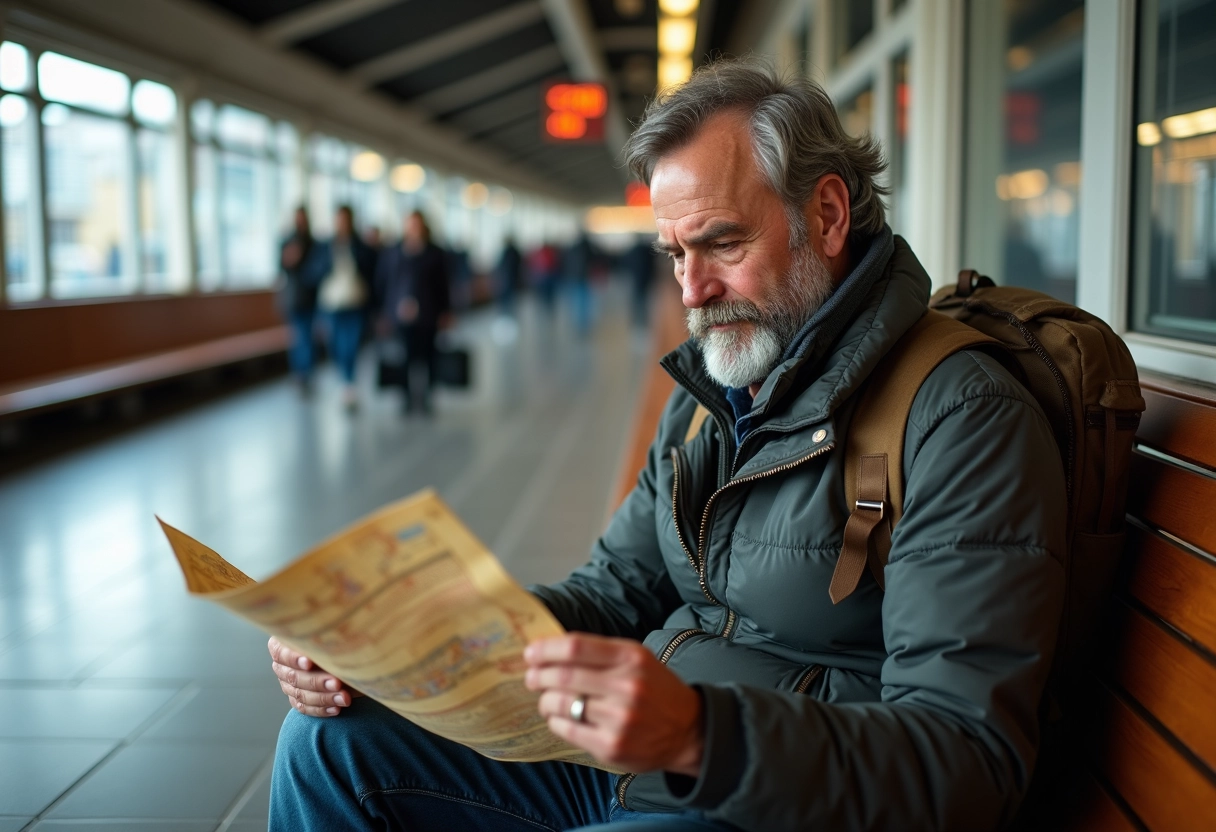
The wanderlust syndrome does not stop at the borders of dreams. It seeps into everyday life, influences choices, and guides priorities. For many, routine quickly becomes synonymous with suffocation; the call of departure is felt, irresistible. Social media and specialized sites amplify this desire, bombarding users with disorienting images, adventure stories, and promises of experiences to be had elsewhere. When the wait for the next trip drags on, frustration increases. This is not without consequences: this passion for travel develops open-mindedness, creativity, and adaptability. But it can also provoke instability, financial pressure, and sometimes isolation, especially when returning to ordinary life becomes difficult to bear.
At the crossroads of pleasure and dependence, the travel disease raises questions. Should one give in to every impulse or learn to cope with this desire? In the face of this dilemma, industry professionals innovate: they offer formats adapted to those seeking meaning, novelty, without traveling far or for long. The micro-adventure is appealing: a hike nearby, a night under the stars, a bike ride restores local discovery to its full value. Gratitude, in turn, becomes a valuable tool: marveling at the ordinary, cultivating curiosity in daily life, transforming every outing into an opportunity to learn.
Here are some concrete ways to channel this need for elsewhere without losing one’s footing:
- Plan regular getaways, even brief ones
- Explore the surroundings with fresh eyes
- Incorporate travel-inspired activities into everyday life
- Lean on a community sharing this passion
Over the years, the question of energy sobriety invites us to rethink our relationship with travel. Less far, differently, with more attention paid to each experience: discovery takes on other forms, deeper, sometimes even richer. When obsessive travel calms down, it is our connection to the world that is redrawn, at the rhythm of new learnings and re-evaluations. Perhaps the greatest adventure begins where we decide to look anew, even at what we thought we knew by heart.