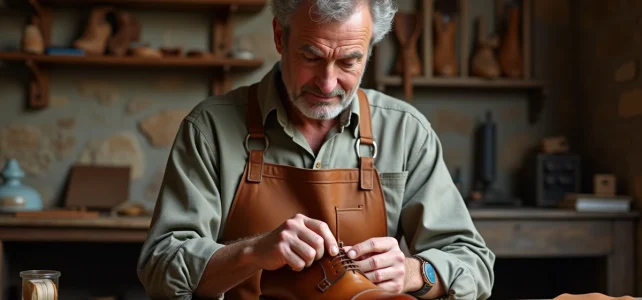
When we talk about high-end shoes, the country of manufacture makes a significant difference. The leather, the assembly, the finishes, the durability: each step depends on local expertise passed down through generations. Identifying the best countries for shoe manufacturing helps to understand why two seemingly similar models do not offer the same comfort or longevity.
Leather Traceability and REACH Standards: The European Regulatory Filter
Before comparing countries, one technical criterion deserves your attention: regulations on materials. Since 2025, the European Union has extended REACH standards to high-end supply chains. In practical terms, leather and glue traceability is now mandatory for any product sold on the European market.
This requirement directly benefits European producers. A manufacturer based in Portugal or Italy is already operating within this regulatory framework. They control the origin of their hides, the tanning processes, and the authorized chemicals.
For a brand sourcing outside of Europe, compliance adds costs and delays. Each supplier must be audited, every batch of leather documented, and certificates verified. This regulatory filter partly explains why high-end collections are still predominantly produced on the European continent. A comprehensive overview can be found on the manufacturing of Belgian shoes and the neighboring sectors that benefit from this common framework.
Portugal: The Fastest Upscale Growth on the Continent
Have you noticed that more and more premium brands are displaying “Made in Portugal”? It’s no coincidence. Portugal has become the second-largest shoe producer in Europe, surpassing Spain in recent years. It is even the only country on the continent to have recently increased its volumes, according to Portugal Resident.
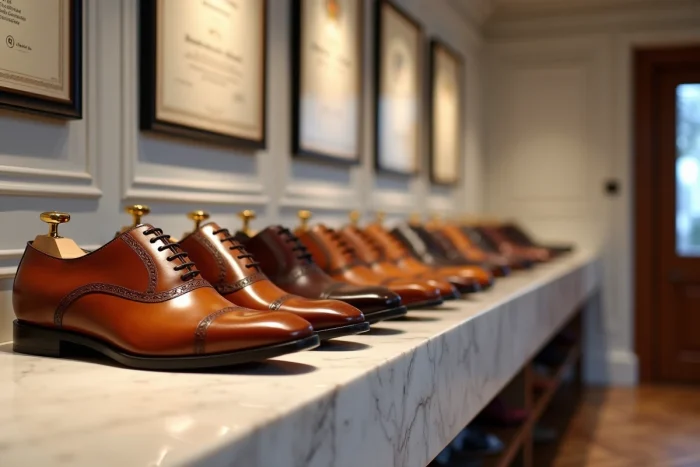
Why this choice? Portuguese workshops combine three advantages that are hard to find elsewhere:
- An artisanal know-how passed down from generation to generation, particularly in northern regions like Porto and Felgueiras, where entire families have been working with leather for decades.
- Production costs lower than those in Italy, allowing emerging brands to access high-quality products without blowing their budget.
- Flexibility on small series, a decisive point for young brands that do not order thousands of pairs at once.
Portugal is no longer a well-kept secret. It is a strategic choice made by brands seeking European quality at a controlled price.
Italy: High-End Leather as an Industrial Standard
Italy remains the global reference for luxury footwear. This status relies on a complete ecosystem: tanneries, assembly workshops, designers, and component suppliers are concentrated in the same geographical areas, mainly in Tuscany and the Marche region.
Tuscan vegetable tanning gives leather a recognizable patina and suppleness. Italian artisans master assembly techniques such as Goodyear stitching or Blake stitching, which ensure prolonged durability and the possibility of resoling the shoe.
The price reflects this demand. A pair made in Italy costs significantly more than a Portuguese or Spanish production. For established luxury brands, this extra cost is justified by the prestige of “Made in Italy” and the customer perception that accompanies it.
Italy dominates the ultra-premium segment. For accessible high-end, the quality-price ratio often leans towards Portugal.
Automated Manufacturing in Busan: South Korea Enters the Game
An unexpected player is gaining ground. Busan, South Korea, is establishing itself as a strategic hub for the automated manufacturing of high-end shoes. International brands are turning to it for robotics and technical precision, according to Team France Export.
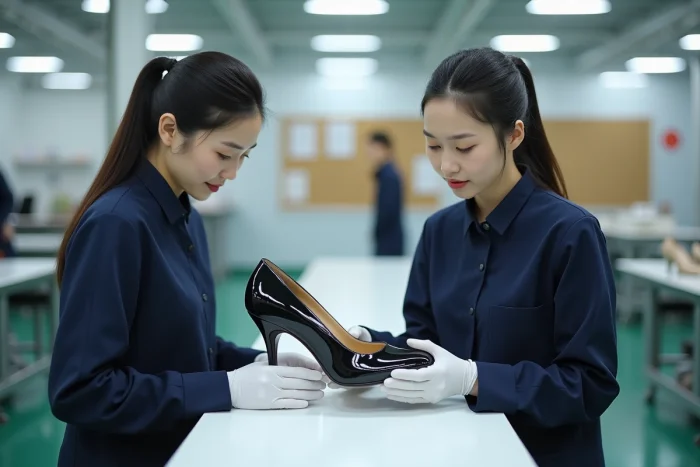
The interest in Busan does not lie in traditional craftsmanship. On the contrary: robotics allows for a manufacturing consistency that is impossible to achieve manually. Each pair comes out with tolerances of a few tenths of a millimeter. For high-end technical shoes (premium sports, outdoor), this precision is a game changer.
This model does not replace Italian or Portuguese craftsmanship. It opens a different segment where technical performance takes precedence over manual work. Both approaches coexist and meet distinct expectations.
China and Vietnam: Mass Production or Upscaling?
China remains the world’s largest shoe producer, with an overwhelming share of global volumes. Vietnam follows, driven by orders from major sports brands.
These two countries are associated with mass production. The reality is evolving. Vietnam and India are strengthening their cooperation to upscale and compete with China in the premium segments, through technology and know-how exchanges, as reported by Le Courrier du Vietnam.
However, high-end “Made in China” or “Made in Vietnam” remains a difficult selling point for European consumers. Market perception hinders adoption, even when technical quality is present. Brands producing in Asia for the premium segment often prefer not to highlight the geographical origin.
- China excels in volumes and low costs, with unmatched production capacity.
- Vietnam is making progress in sports footwear thanks to investments from industry giants.
- India, still discreet, is developing partnerships to access the premium segment.
United Kingdom and France: High-Identity Niches
The United Kingdom retains a special place for certain categories. Feedback from luxury brands indicates a growing preference for British production in capsule collections and limited editions. English expertise in dress shoes (derby, oxford, ankle boots) remains a benchmark for connoisseurs.
France, for its part, has a few workshops specializing in bespoke and ultra-high-end shoes. French production aims for exception rather than volume. The houses that manufacture in France do so for very limited series, where each pair is practically unique.
These two countries do not compete with Portugal or Italy in terms of volumes. They occupy narrow niches where the brand’s history and geographical origin justify a high price.
The choice of manufacturing country depends on the brand’s positioning, the type of shoe, and the budget. Portugal currently offers the best balance between artisanal quality and accessibility. Italy remains the luxury reference. Busan opens a promising technological path. Each sector meets a specific need, and it is this diversity that structures the high-end shoe market in 2025.